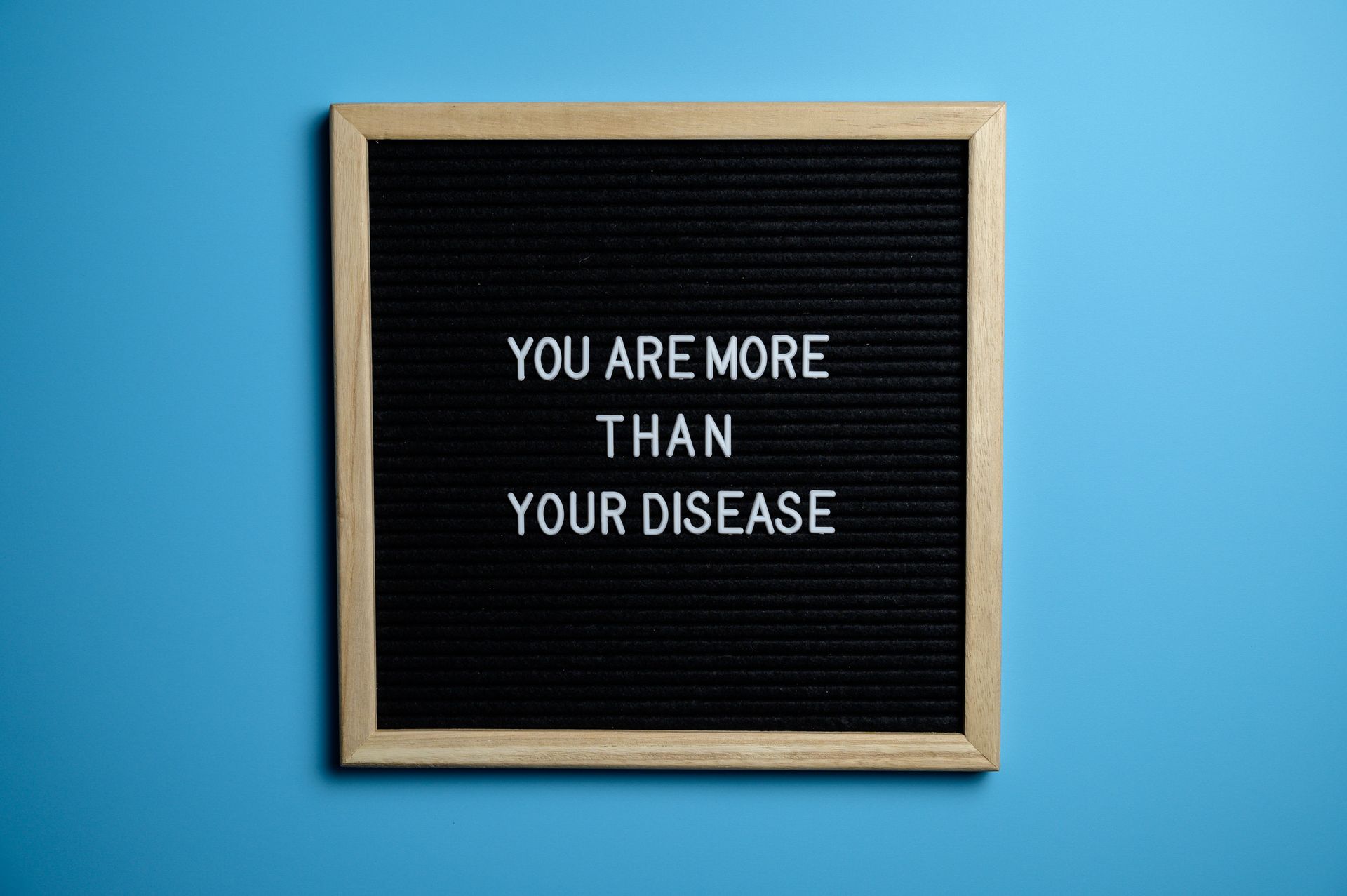
I had a conversation recently that stayed with me long after we stopped recording. It was about that moment that happens for a lot of people living with chronic pain or illness — the moment where you realize the doctors, the prescriptions, the specialists have given you everything they know how to give, and you're still hurting. That moment can break you, or it can be the exact place where you finally start looking for the piece nobody handed you: your own power to participate in your own healing.
Sometimes the system runs out of answers before you run out of pain.
There's a story worth sitting with — years of being on every narcotic a doctor could prescribe, none of it working, pain so constant that even the people closest to you had to physically carry you through basic tasks. That's not a small thing to live through. And it's exactly the kind of exhaustion that either flattens a person completely, or becomes the turning point where they stop waiting for someone else to fix it and start asking what they can learn to do themselves.
Nobody taught you about your own body — that doesn't mean you can't learn it now.
There's an entire system running quietly underneath your skin that most of us were never once taught about in school or in a doctor's office — one that plays a massive role in whether pain and swelling show up or stay away. That's not a personal failing. It's just a gap in how most of us were educated about our own bodies. But a gap you were never taught to close is still a gap you're allowed to close now, on your own terms, at whatever pace makes sense for you.
Healing yourself doesn't mean healing yourself alone.
Taking your power back isn't the same as rejecting help. It often starts because someone else — a friend, a teacher, a healer further along their own path — hands you a door you didn't know existed. Say yes to that door even when you're skeptical. Some of the most transformative practices in a person's healing journey started as someone else's suggestion that felt a little unfamiliar at first.
Watch your own body prove you right.
There's something different about learning a healing practice while your own body responds to it in real time — swelling visibly going down, breathing becoming easier, the physical proof arriving faster than you expected. That kind of evidence does something belief alone can't. It converts a hope into a certainty, and it plants the idea that maybe you have more influence over your own condition than you were ever told.
The mind and the body heal on the same timeline, whether you plan for that or not.
Physical practices that move stagnation out of the body tend to move emotional stagnation right along with it. People who arrive heavy with grief or depression often leave lighter in ways that go beyond the physical — because the body and the spirit were never actually separate systems, no matter how differently they get treated in a doctor's office. Healing rarely stays contained to just one lane once it actually starts moving.
And the goal was never invincibility. It was refusing to quit.
Nobody heals in a straight line, and nobody with a real, ongoing condition gets to walk away from it forever solved. But there's a difference between managing a body that keeps fighting you and surrendering to it completely. The second one is defeat. The first one — flipping the negative thought, standing barefoot in the grass, learning the system nobody explained to you, saying yes to the unfamiliar door — that's what taking your power back actually looks like in practice. Not perfect. Just persistent.
So if you're in the middle of a body that won't cooperate and answers that haven't come yet:
The power to heal was never fully in someone else's hands. Some of it always belonged to you — waiting on you to go looking for it.