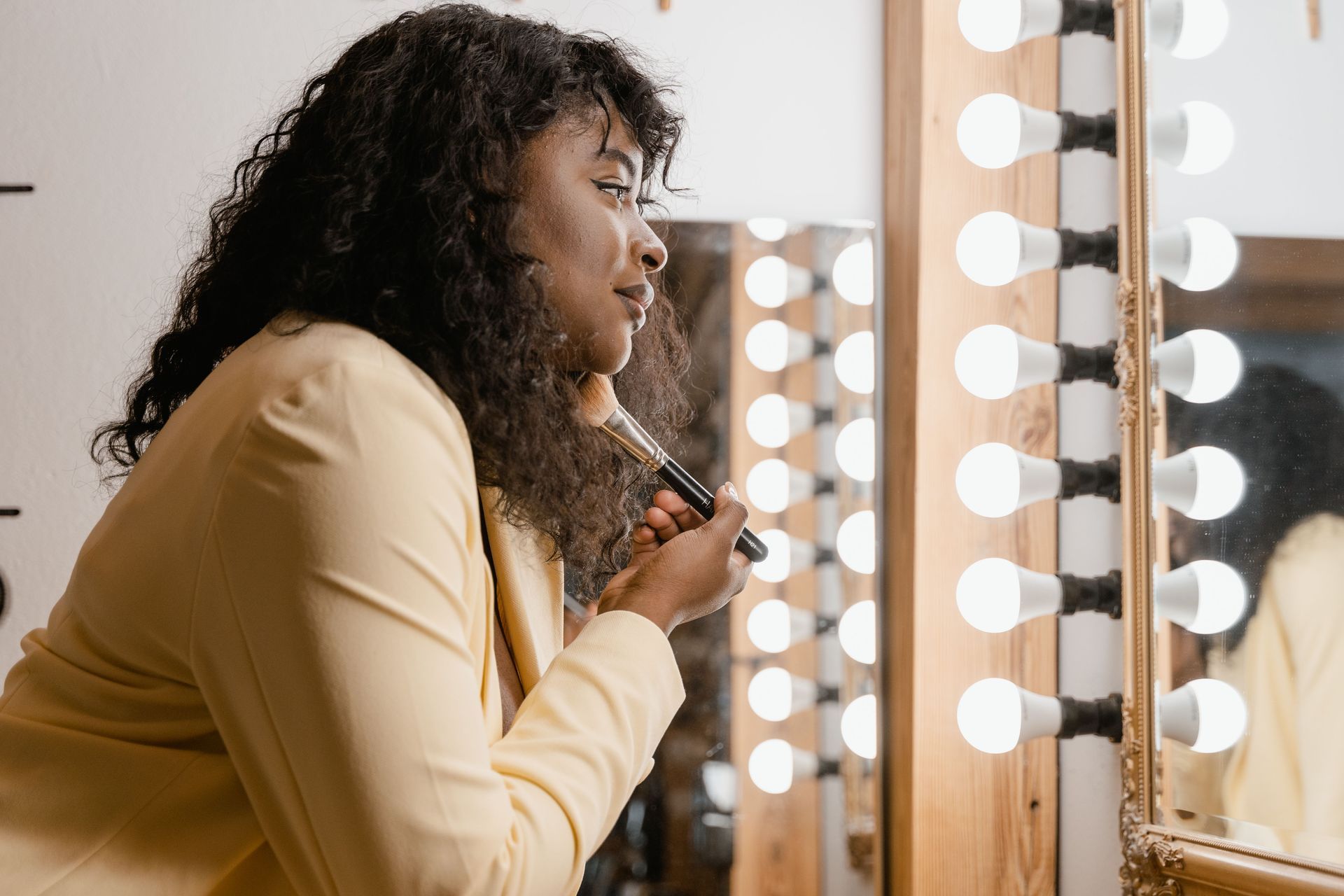
Picture a woman sitting in a church parking lot, engine off, mirror down, dabbing her eyes dry before she walks inside to say good morning, how are you, blessed and highly favored. Nobody in that building will know what just happened in that car. That's not an isolated moment. That's a daily ritual for more women than anyone wants to admit, and it is quietly costing them more than the struggle ever did.
We treat the mask like protection. It isn't. It's a slow leak. Every morning you smile through what you're actually carrying, every time you answer "I'm blessed" when the true answer is "I'm barely standing," you're not managing the pain, you're just storing it somewhere it can't be seen. And things that get stored instead of released don't disappear. They compound. They show up later as exhaustion that sleep doesn't fix, as short tempers over nothing, as a body that starts breaking down in ways a doctor can't fully explain. The mask doesn't protect you from the struggle. It just delays the bill, with interest.
There's a reason so many women, especially the ones holding titles like mother, wife, minister, entrepreneur, leader, wear that mask so well. Somewhere along the way we learned that struggling in public reads as weakness, and weakness feels dangerous when people are depending on you. So we perform composure. We keep the makeup fresh and the smile wide and the answers short, because admitting "I'm not okay" feels like it might unravel everything we've built. But composure built on concealment isn't strength. It's just exhaustion with better lighting.
Here's what nobody tells you about taking the mask off: it doesn't happen because someone convinces you it's safe. It happens because you get tired. Tired of performing fine. Tired of managing everyone else's comfort with your pain. Tired of the disconnect between what your mouth says and what your spirit is actually carrying. That exhaustion, eventually, becomes louder than the fear of being seen. And that's usually the moment real healing has a chance to start, not before.
What makes this worth talking about publicly, and not just privately in therapy or in prayer, is what happens when you finally do take the mask off in front of someone else. Your honesty about struggling doesn't make you the weak link in the room. It becomes permission. The woman sitting two seats away, wearing her own mask just as convincingly as you wore yours, needed to hear one person say it out loud first. Nobody heals in isolation, and almost nobody realizes they're not alone in what they're carrying until somebody goes first and shows them it's survivable to say it plainly.
So if you recognize yourself in that woman in the parking lot, dabbing her eyes before she walks in smiling, let this be the invitation to put the mirror down and skip that step. You don't have to collapse dramatically to be honest. You don't need an audience or a diagnosis to justify saying "I'm struggling." You just need to stop performing okay long enough to actually become it. The struggle was never going to be what breaks you. It's the mask, worn long enough, that will.