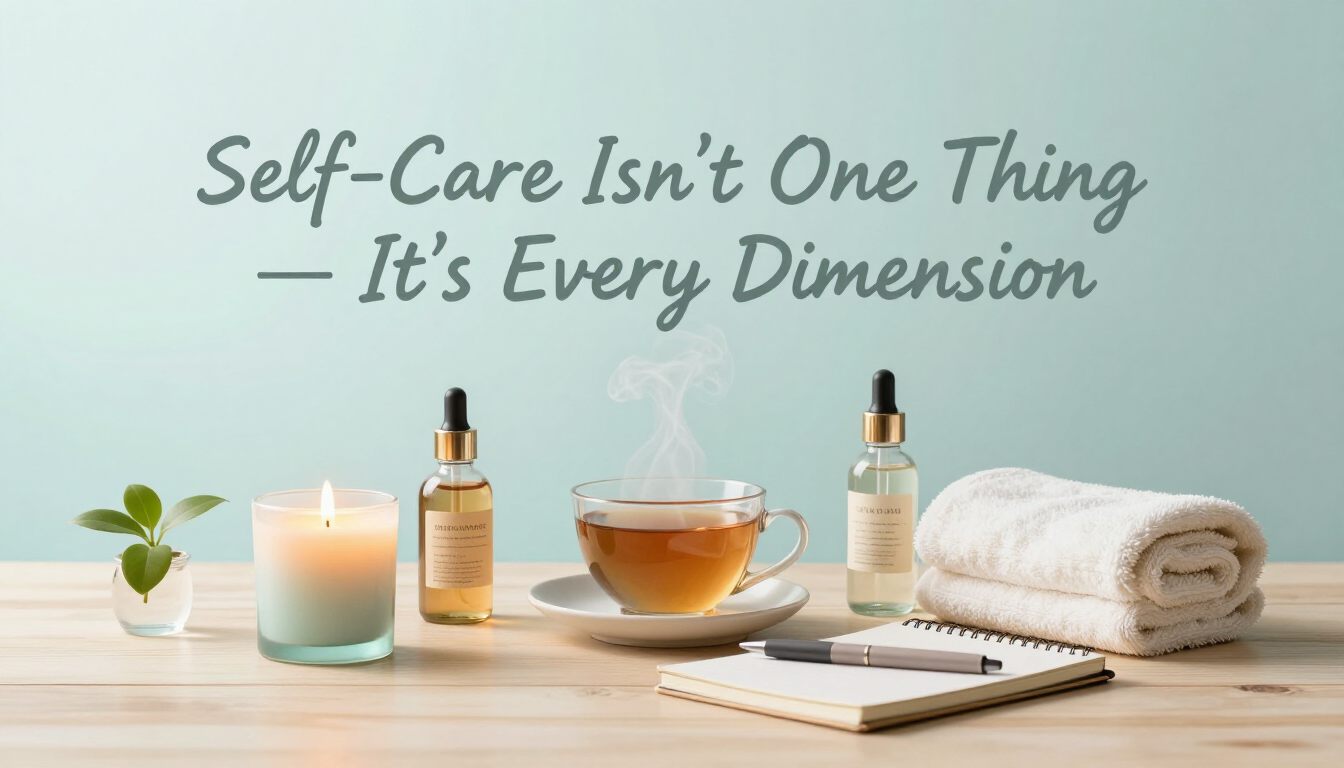
I had a conversation recently that opened with pageant news and ended up somewhere much deeper. There's a version of self-care that gets sold to us as one small thing — a bath, a candle, a day off. And those things aren't nothing. But real self-care runs a lot deeper than a single ritual, and if you're only tending to one piece of yourself while the rest quietly goes unattended, you're not actually taking care of yourself. You're just managing a symptom.
Trauma doesn't need a war zone to be real.
There's a stubborn assumption that PTSD only belongs to combat veterans. But trauma shows up anywhere a person is exposed to something overwhelming — a traumatic birth, an abusive relationship, an injury, a childhood event they were too young to even name at the time. The symptoms don't discriminate by what caused them: flashbacks, nightmares, avoidance, irritability, a low hum of always feeling on edge. If any of that sounds familiar and you didn't think it applied to you because your story doesn't look like a movie plot, it might be worth a second look.
Even children carry it, even when the adults around them don't recognize what they're seeing.
A child who's experienced real trauma doesn't always get identified as traumatized. More often they get labeled — difficult, badly behaved, hard to manage — when what's actually happening underneath is a nervous system responding to something no one properly named or addressed. That mislabeling can follow a person for years if nobody stops to ask the right question.
Talking about it is where the healing actually begins.
The instinct after something traumatic is often to keep it as a secret — buried under shame, guilt, or the simple exhaustion of not wanting to revisit it. But healing doesn't start in the silence. It starts the moment it gets spoken, in a space that feels safe enough to hold it. That might be a trained therapist. It might be a specific kind of therapy — cognitive behavioral work, EMDR, whatever fits the person. It might be medication alongside the talking. There's no single right doorway in, but there is a common starting point: it has to be said out loud to someone.
Recovery is possible. That's not a hopeful guess — it's the actual, real outcome available to you.
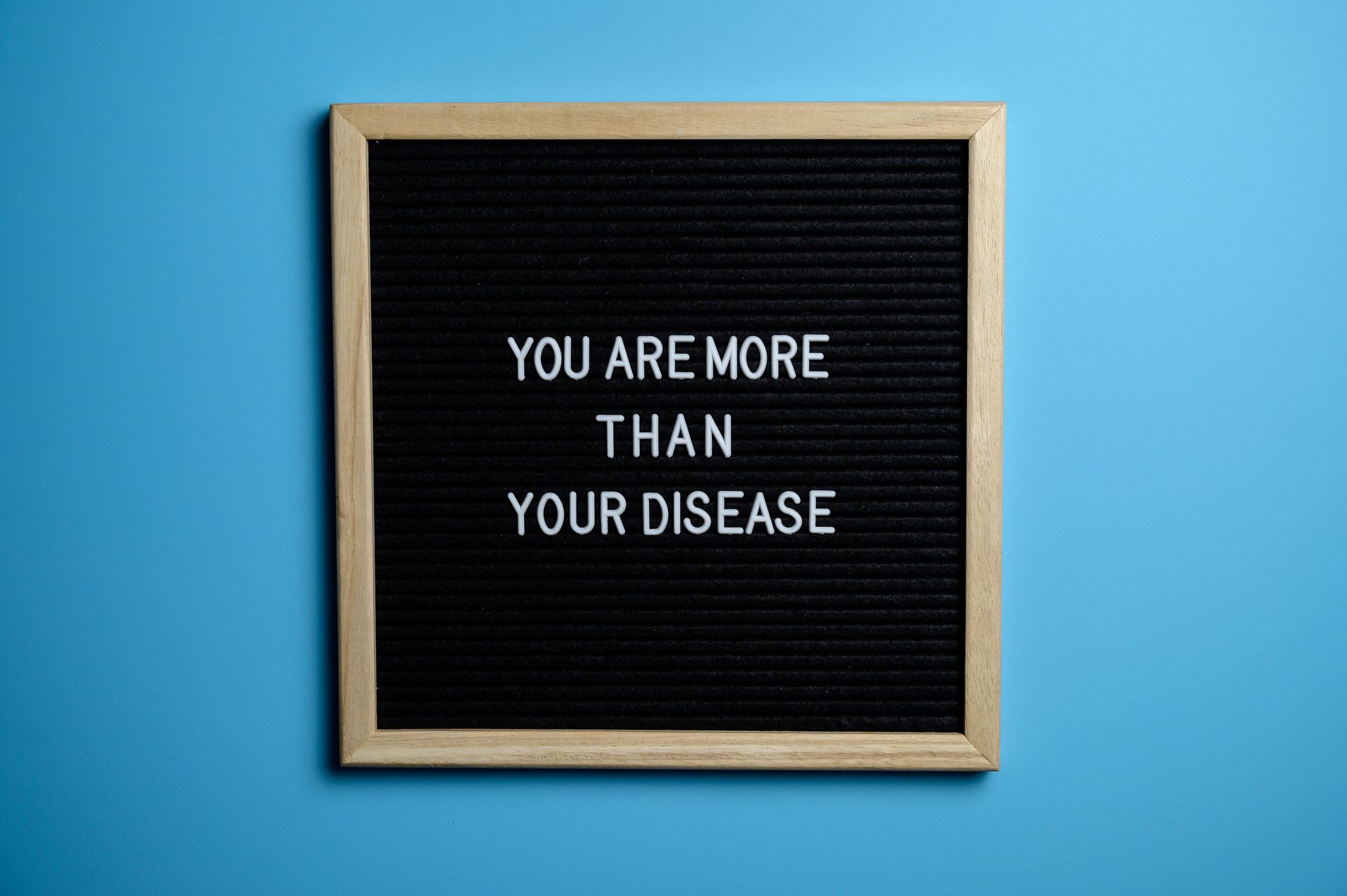
A PTSD diagnosis isn't a life sentence, and it isn't a sign of weakness either. It's evidence that something happened to you, not evidence that something is permanently wrong with you. With the right support, the right treatment, and enough time, recovery isn't just possible. It's expected.
Faith and mental health were never supposed to be separate lanes.
There's a hesitancy in a lot of professional spaces to bring faith into the conversation, as if spirituality and clinical care can't sit at the same table. But for a lot of people, prayer, worship, gratitude, and scripture aren't a replacement for treatment — they're part of the toolkit alongside it. Starting the day by naming what you're actually thankful for, before asking for anything else, is a small practice that does real work on a mind that's been stuck in a hard place.
Boundaries are a form of self-care, not just a relationship strategy.
Sometimes the most loving thing you can do for your own healing is limit your exposure to a person who triggers the very thing you're trying to recover from — even if that person is family, even if it makes a holiday gathering complicated. Protecting your peace isn't selfish. It's part of what recovery actually requires.
Self-care has categories, and most of us are only tending to one or two.
Emotional care — actually processing how you feel instead of pushing past it. Physical care — movement, water, vitamins, a body that's paid attention to instead of ignored until something breaks. Spiritual care — however that looks for you. Cognitive care — reading, learning, challenging your brain instead of defaulting to endless scrolling. And the one that rarely gets mentioned in the same breath as self-care: financial care — actually managing what you earn, saving for what's ahead, because financial stress bleeds into every other category whether we admit it or not.
Sometimes the mental struggle has a physical root nobody thought to check.
A vitamin D deficiency can look and feel like depression or anxiety, and addressing the physical piece can lighten a mental load that talk therapy alone hadn't fully touched. It's worth getting an actual physical, not just assuming everything difficult you're feeling lives only in your mind.
You have to put your own oxygen mask on first — not as a cliché, but as a literal strategy.
Women especially tend to default to caring for everyone else first — the kids, the relationship, the job — while their own healing waits its turn indefinitely. But you cannot pour from a depleted place. Taking care of yourself first isn't a betrayal of the people who need you. It's the only way you'll actually be able to show up for them at all.
So if you're in the middle of a healing journey, here's the whole message distilled:
You're not weak. You're not alone. Whatever happened wasn't your fault. And healing was never meant to happen in just one part of you — it happens when you finally start tending to all of them.