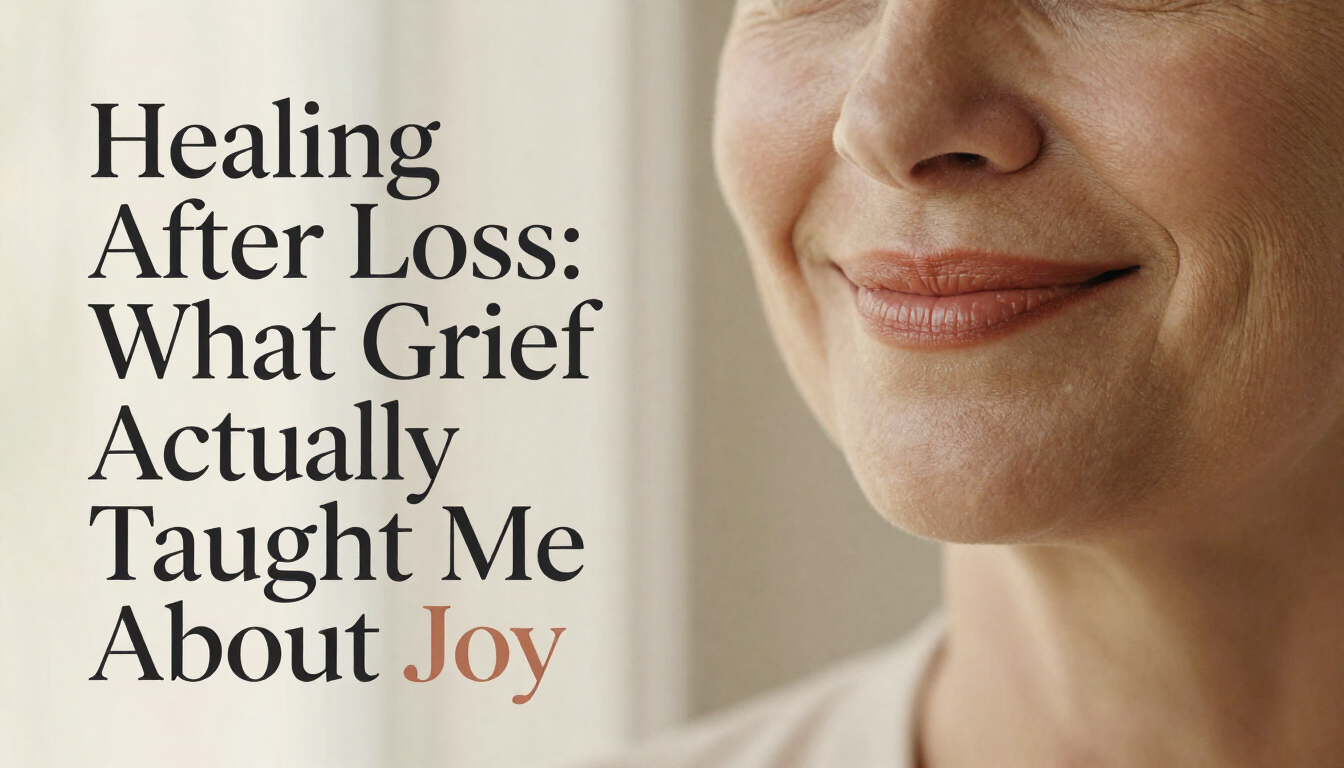
I need to sit you down for this one, because the topic is heavier than most, and it deserves to be handled with care. It's about grief. Real grief. The kind that reshapes a person from the inside out. And there's no tidy five-step plan to "move on" here. Just something much more honest than that.
You're allowed to be mad at God.
That's not a popular thing to say out loud, especially in church spaces where we're taught to keep our faith looking neat. But here's the truth: God already knew what you'd be walking through before you did. He can handle your anger. He can handle you throwing the paint all over the walls instead of carefully coloring inside the lines when you talk to Him. What He doesn't need from you is a performance of peace you don't actually feel.
And can we retire the phrase "God won't put more on you than you can bear"? For someone in the thick of unimaginable loss, that line doesn't comfort — it isolates. It makes a person feel like admitting they can't bear it is some kind of failure. It's not. Some days you don't get up because you feel strong. You get up because somebody out there needs to see that it's possible to get up at all.
If you don't know what to say to someone who's grieving, say that.
So many of us go quiet around grief because we're terrified of saying the wrong thing. Here's the release: you're allowed to say, "I don't know what to say." That honesty means more than a rehearsed sentence ever could. Show up. Sit in the room. Send the message that just says I love you, I'm here. Don't try to explain what happened or why. Just be present. Presence is the whole assignment.
Self-blame will cripple you if you let it stay.
If you've lost a child and you're carrying guilt — wondering what you missed, what you could have done differently — here's a reframe worth sitting with: you had that child for exactly as long as you were given them. Every life comes in with an expiration date already attached. We just don't get to see it ahead of time. You gave what you had to give, and a child can only receive what they allow themselves to receive. That's not a cop-out. That's the truth of loving another human being who has their own free will, their own story, their own path. Ask God to remove the guilt, because guilt left unchecked doesn't fade on its own — it takes root and keeps you from taking your next step.
Find the thing that lets your hands work while your heart heals.
A creative outlet isn't a luxury when you're grieving — it might be one of the few things that keeps you tethered. Something with your hands. Something that doesn't ask you to explain yourself, just lets you exist in the doing. Painting, sewing, journaling, building something in memory of the person you lost instead of dreading the day on the calendar that marks their absence. Turn it into remembrance instead of just survival.
Stop handing your peace to people-pleasing.
This one hits close for a lot of us. Saying yes when your whole body is screaming no because you don't want anyone upset with you. The way through it starts with one honest question before you agree to anything: will this actually bring me joy? Not will it keep the peace. Not will it make them happy. Will it bring you joy. If the answer isn't yes, you don't owe an explanation for saying no.
Cutting the cord doesn't mean cutting the love.
Children grow, and grown children live their own lives, make their own choices, and sometimes those choices break our hearts. But their choices are not verdicts on our worth as parents. You can love someone completely and still refuse to let their decisions define your own life. That's not distance. That's boundaries doing exactly what they're supposed to do.
And in the end, it's still possible to call your life rich.
Even after loss that most people can't imagine, there's a version of looking back that isn't about what was taken, but what was given. The years you had. The love that was real while it lasted. A life fully lived on your own terms, played out with whatever hand you were dealt, is still a winning hand.
So if you're in the middle of something that feels unbearable right now, hear this: it's okay to not be okay. And on the other side of that honesty, joy is still available to you. It doesn't come back the same way it left. But it comes back.
If this touches something personal for you and you're carrying grief that feels too heavy to hold alone, please don't hold it by yourself — a counselor, a support group, or someone you trust can help carry it with you.